
The indigenously developed naval version of the Prithvi short-range ballistic missile has a strike range of up to 350 km and can carry 500 kg of conventional or nuclear warhead, a Defence Research and Development Organisation official said.

Chief Controller (R&D) Dr W Selvamurthy told reporters in Bangalore that about 10 people from the US have been joining DRDO each year and the trend is growing.
The indigenously built multi-target missile can carry a 50kg payload.

India celebrated its 71st Republic Day on Sunday with a 90-minute display. The Armed Forces took centre-stage parading an array of weapons and the Defence Research Organisation put up a display of state-of-the-art technology. Here are some of the best moments from Rajpath.
The Indian government has never bothered to formulate a coherent national policy on cyber war, reports Vicky Nanjappa
After a detailed deliberations, it was decided a standard draft international agreement for establishing hotlines and a set of standard operating procedures will be prepared by DRDO and MTNL, which will be used for negotiations with foreign partners, the sources said.
Moving a step closer to completing its nuclear triad, India today successfully test fired a ballistic missile, with a strike range of around 1,500 km, from an underwater platform in Bay of Bengal. "The medium range K-5 ballistic missile was test fired successfully today from an underwater pontoon and all parameters of the test firing were met," said Defence Research and Development Organisation chief V K Saraswat from the undisclosed test area.
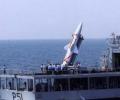
India on Thursday successfully test-fired its nuclear-capable Dhanush ballistic missile with a strike range of 350 km
Defence Research and Development Organisation Director General Vijay Kumar Saraswat on Friday said the Agni-V missile, which took 30 years to be developed, was the best such thing in the 21st century. Agni-V is an intercontinental ballistic missile developed by the DRDO. It is part of the Agni series of missiles, one of the missile systems under the original Integrated Guided Missile Development Programme.
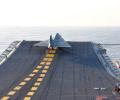
On Saturday, the aircraft made its first landing on the deck of INS Vikramaditya which was also a major milestone. Both the landing and take off by the aircraft put India among a select group of nations having the capability to design such a jet which can operate from an aircraft carrier.
Former President A P J Abdul Kalam said the Pokhran tests of 1998 were successful as desired yield was obtained. Kalam was reacting to former senior Defence Research and Development Organisation scientist K Santhanam's contention that Pokhran-II tests had not met the desired objective.
In contrast to the US which is "doing a lot of work" in developing and manufacturing Unmanned Combat Aerial Vehicles (UCAVs), India is more focused on developing UAVs as it considers intelligence gathering more challenging in future wars, Defence Research and Development Organisation said on Friday.
As protests rage in Kudankulam and reach a crescendo, V Ponraj, scientific advisor to Dr A P J Abdul Kalam, speaks about the report he and the former Indian President prepared in this interview with rediff.com's Shobha Warrier.

In his address at the 41st Defence Research and Development Organisation Directors Conference, he also said the development of weaponry and other systems should be done keeping "future warfare" in mind.

Indian Air Force chief Air Chief Marshal RKS Bhadauria flew a Tejas single-seater light combat aircraft MK1 FOC fighter during his visit to IAF and flight test establishments and facilities of Defence Research and Development Organisation (DRDO) and Hindustan Aeronautics Limited (HAL) in Bengaluru.

The Israel Defence Forces (IDF) spokesperson Lt Col Jonathan Conricus said on Wednesday that 1200 Israelis were killed and more than 2,700 wounded and emphasised that the Israeli soldiers are ready to execute mission in Gaza.
Bio-toilets developed by the Defence Research and Development Organisation on Tuesday earned praise from Prime Minister Manmohan Singh who said that these could go a long way in solving the problem of open defecation in rural India.
India is developing an unmanned aerial vehicle similar to the American Predator drones with an investment of Rs 1,500 crore and planning unmanned combat vehicles, a key official involved in the project said on Monday.

Describing the trial as "fully successful", the sources said, the sophisticated missile travelled for 19 minutes and covered 4,900 km.

India successfully test-fired its indigenously built nuclear capable Agni-I missile, which has a strike range of 700 kilometre on Thursday, from a test range off Odisha coast as part of a user trial by the army.

Before Data Patterns developed an indigenous check-out equipment, Brahmos Aerospace was paying a Russian supplier three times what it will now pay the Indian company.

The surface-to-surface tactical missile was blasted off from a canister strapped to the ground launcher from launch complex 4 of the Integrated Test Range in the APJ Abdul Kalam Island around 12.10 pm.

India has tested a 1,000 kg indigenously-developed glide bomb, which successfully hit a target 100 km away, in the Bay of Bengal off the Odisha coast, making the country self-reliant in guided precision bombs.
India on Thursday successfully test-fired the Agni-5 Inter-Continental Ballistic Missile, which was developed by the Defence Research and Development Organisation.The missile was test-fired from Wheeler Island in Odisha at 8.05 am.
India's long-criticised Akash anti-aircraft missile is now blazing towards success. After years of rejection from the military, the Akash is being accepted as a world-class missile.
K Santhanam, former Defence Research and Development Organisation scientist, who has rubbished the nuclear test at Pokhran in 1998 told journalists that he believed India neede to conduct two more tests to perfect the thermo-nuclear technology required to make a Hydrogen bomb. Santhanam maintained that simulations or computer-based tests were not enough to perfect thermo-nuclear technology. His statements are an antithesis of the Indian governments' position on this issue.

With the Defence Research and Development Organisation facing "bitter criticism" over delays in major projects like Light Combat Aircraft and the Arjun tank, Defence Minister A K Antony on Wednesday asked the research agency to complete its programmes within the prescribed time-limit.

BrahMos Aerospace, an India-Russia joint venture, produces the supersonic cruise missile that can be launched from submarines, ships, aircraft, or from land platforms.
A look at some of the best technologies that DRDO has given India
India is deploying cutting-edge technology to defeat a simple insurgent weapon that J&K militants and Naxals are using to lethal effect: the Improvised Explosive Device, or IED. Swedish company Saab has offered to partner India's Defence Research and Development Organisation in fitting Saab's CARABAS radar on India's Dhruv Advanced Light Helicopter (ALH), which would allow the scanning of wide swathes of territory to detect IEDs well before they can be exploded.
Marking a major step forward in technology development, India is expected to equip indigenously-built Dhruv helicopters with missiles in two years as part of an ambitious missile-development programme

From the seas to the stars, this partnership will now be deepened by the defining role of technology, the statement said.
When the armoured vehicles arrive in this 'kill zone', each PALM 400 picks out its target and fires an armour-penetrating projectile, penetrating it from the top where its armour protection is the least.

India on Monday successfully test-fired its nuclear-capable Agni-II missile intermediate range ballistic missile, with a range of 2000 kms, from the Wheelers Island off Orissa coast.
After three successful ballistic missile tests during the last fortnight, the Defence Research and Development Organisation is finalising preparations for the big one.
India's indigenous Light Combat Aircraft Tejas has successfully completed air-to-air close combat missile firing tests, ahead of its clearance for induction into the Indian Air Force.

Prominent in the DRDO's display are several artillery guns, armoured vehicles and tanks that underline a measure of success in developing these key weapons platforms for the army. Here are three systems that are headed for success.
Agni 5 is not China-specific, as some have claimed. It is essential to India's overall security and should be followed by a submarine-launched version, says Premvir Das
The Indian army will have to wait four to five years to acquire Inter-Continental Ballistic Missile Agni-5, which was successfully tested on 19 April by the Defence Research and Development Organisation. Sheela Bhatt reports
 © 2026 Rediff.com - Advertise with us - Disclaimer - Privacy Policy - Sitemap - Feedback - About us - Terms of use - Grievances